
 English
 中文简体
中文简体 English
 Русский
 Español
 Português
 Türkçe
 العربية
 Deutsch
 Polski
 Italiano
 Français
 한국어
한국어 ไทย
ไทย Tiếng Việt
 日本語
日本語











Abstract
The rapid proliferation of solid-state lighting (SSL) technologies necessitates rigorous photometric and colorimetric testing to ensure compliance with global energy efficiency and performance standards. Traditional goniophotometric systems, while effective, often face challenges in maintaining measurement accuracy for large or heat-sensitive luminaires due to the rotating-lamp method. This paper examines the technical architecture and operational advantages of a Moving Detector Type C Goniophotometer, specifically the LSG-6000, which adheres to the LM-79-19 standard. A key innovation discussed is the system’s ability to integrate with a **handheld spectroradiometer** for spatial correlated color temperature (CCT) distribution analysis, offering a versatile and accurate solution for modern photometric laboratories. The paper evaluates the system’s compliance with international standards such as CIE-121, EN 13032-1, and EU 2019/2015, and presents a case study demonstrating its efficacy in measuring luminous intensity distribution, zonal flux, and spectral parameters. The findings indicate that this integrated approach significantly enhances measurement reliability for a wide range of lighting products, from street lamps to horticultural lighting, while maintaining a compact darkroom footprint. The combination of a moving mirror-detector assembly and a portable spectral measurement device represents a substantial improvement over conventional fixed-detector systems, particularly for applications requiring both photometric and spectral data without repositioning the luminaire.
Keywords: handheld spectroradiometer; type c goniophotometer; LM-79-19; Goniophotometry; LED measurement
1. Introduction
Accurate photometric characterization is fundamental to the design, quality control, and regulatory compliance of lighting products. The Illuminating Engineering Society (IES) standard LM-79-19 provides a unified method for the electrical and photometric measurement of solid-state lighting (SSL) products, including light-emitting diode (LED) luminaires and integrated lamps. A critical component of this standard is the requirement for measuring luminous intensity distribution using a goniophotometer, which must produce data in formats compatible with lighting design software such as IES and LDT. Among the various goniophotometer configurations—Types A, B, and C—the Type C system, as defined by CIE-121, is the most widely adopted for general lighting applications due to its ability to maintain the luminaire in its natural burning position. However, conventional Type C goniophotometers often employ a “rotating lamp” method, where the luminaire is physically rotated during measurement. This can introduce errors, particularly for large or asymmetric luminaires, due to gravitational effects on internal components or unstable mounting. To address these limitations, the moving detector (or moving mirror) Type C goniophotometer was developed. This paper presents a detailed analysis of the LSG-6000 Moving Detector Goniophotometer (Mirror Type C), a system designed to overcome these challenges by keeping the luminaire stationary while a reflective mirror and detector move synchronously. Furthermore, this paper explores the integration of a **handheld spectroradiometer** into the goniophotometric test system, enabling the simultaneous measurement of spatial color distribution—a capability increasingly demanded by standards such as CIE S025 and the EU Energy Labeling Directive (EU) 2019/2015. The objective of this study is to demonstrate how this integrated approach provides a comprehensive, standard-compliant solution for modern lighting laboratories.
2. Technical Principles of the Moving Detector Type C Goniophotometer
2.1 Optical-Mechanical Architecture
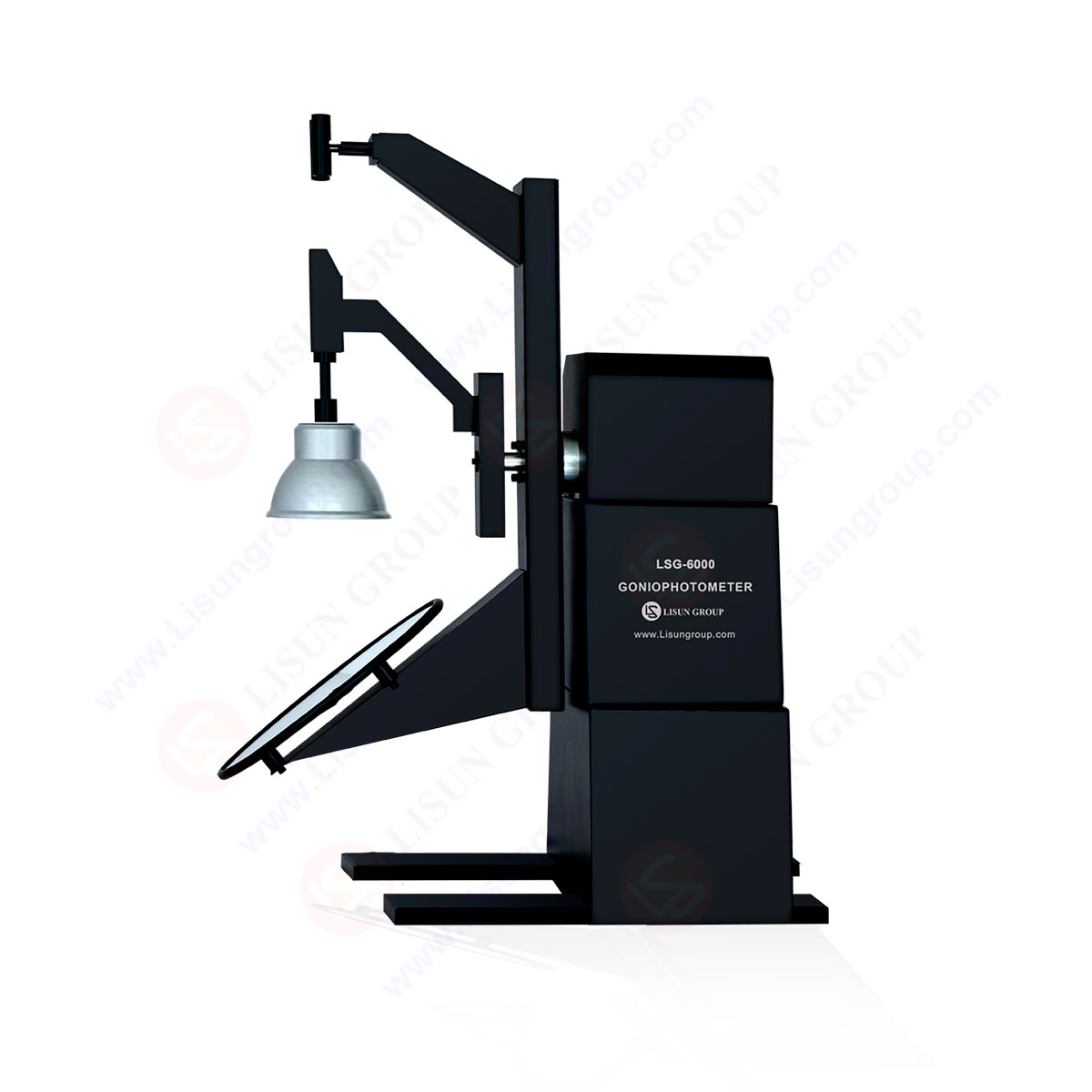
The LSG-6000 operates on a unique moving detector principle that distinguishes it from traditional rotating-lamp goniophotometers. The system consists of a large, highly reflective mirror mounted on a linear rail system, a stationary luminaire mounting platform, and a far-field photodetector. During a measurement cycle, the luminaire remains fixed in its natural burning position, eliminating gravitational and mechanical disturbances. The mirror and the photodetector move synchronously along a defined path, effectively rotating the line of sight around the luminaire’s photometric center. This configuration allows the detector to always receive direct light from the luminaire via the mirror at every angular position. The rotary motor, sourced from Japan’s MITSUBISHI MOTORS, and the decode system, manufactured in Germany, provide angular accuracy of 0.05° and a resolution of 0.001°. This high precision ensures that the system can capture fine details of the intensity distribution curve, which is critical for applications like roadway lighting where beam uniformity is paramount. The system supports a C-axis rotation of ±180° (or 0-360°) and a γ-axis (vertical) rotation of ±180° (or 0-360°), covering the full spherical range required by CIE-121.
2.2 Detector Performance and Calibration
Central to the measurement accuracy is the photometer detector, which is designed to meet the stringent requirements of DIN 5032-6 and CIE Publication No. 69 Class L standards. The detector features a spectral mismatch correction factor (f1′) of less than 1.5%, ensuring minimal error when measuring sources with different spectral power distributions, such as phosphor-converted white LEDs or narrow-band RGB LEDs. The detector is temperature-controlled to maintain stability over long measurement periods. For users requiring spectral data, the system can be optionally integrated with a **handheld spectroradiometer**, such as the LPCE-2 series, to form a goniospectroradiometer (LSG-6000CCD). This combination allows for the measurement of spatial CCT distribution, color rendering indices, and plant lighting parameters like PPF (Photosynthetic Photon Flux) and PPFD (Photosynthetic Photon Flux Density).
3. Standards Compliance and Testing Methodology
3.1 Alignment with LM-79-19 and CIE-121
The LSG-6000 is designed to fully comply with the measurement geometry specified in LM-79-19, Clause 7.3.1, which mandates a Type C goniometer for general lighting. The standard requires that the luminaire is operated at its rated voltage and current, and that the ambient temperature is maintained at 25°C ± 1°C. The LSG-6000’s darkroom can be custom-designed to fit existing laboratory spaces, with minimum height requirements ranging from 3.0 meters (LSG-6000S) to 5.2 meters (LSG-6000L), as shown in Table 1. This flexibility is crucial for laboratories upgrading from older systems without constructing new facilities. The system also meets the requirements of CIE-121, which defines the Type C coordinate system (C, γ). The software automatically calculates and exports data in CIE, IES, and LDT formats, ensuring compatibility with leading lighting design software like Dialux. Furthermore, compliance with EN 13032-1 clause 6.1.1.3 type 4 and SASO 2902 ensures global applicability.
Table 1: Technical Specifications of LSG-6000 Goniophotometer Series
| LISUN Model | Testing Lamp Size (Diameter E* Depth F) | Max. Power | Minimum Darkroom Height | | :— | :— | :— | :— | | LSG-6000 (Standard) | max Φ1600*600mm, 50kg | 600V/10A, AC/DC | 4.1m | | LSG-6000L (Super Big) | max Φ2000*900mm, 80kg | 600V/10A, AC/DC | 5.2m | | LSG-6000B (Big) | max Φ1800*800mm, 60kg | 600V/10A, AC/DC | 4.7m | | LSG-6000S (Small) | max Φ1200*500mm, 40kg | 600V/10A, AC/DC | 3.0m |
3.2 Integration of Spectral Measurement Capabilities
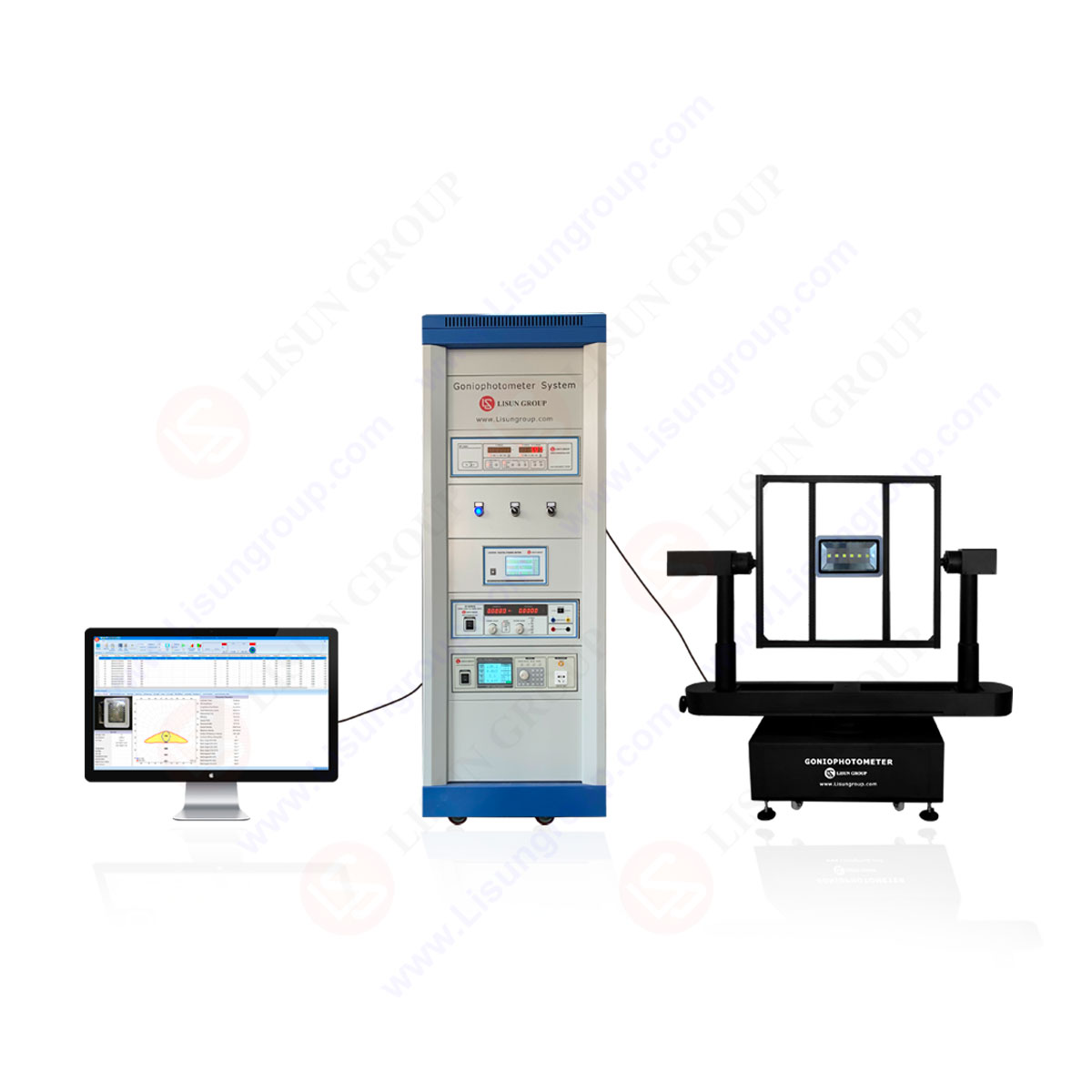
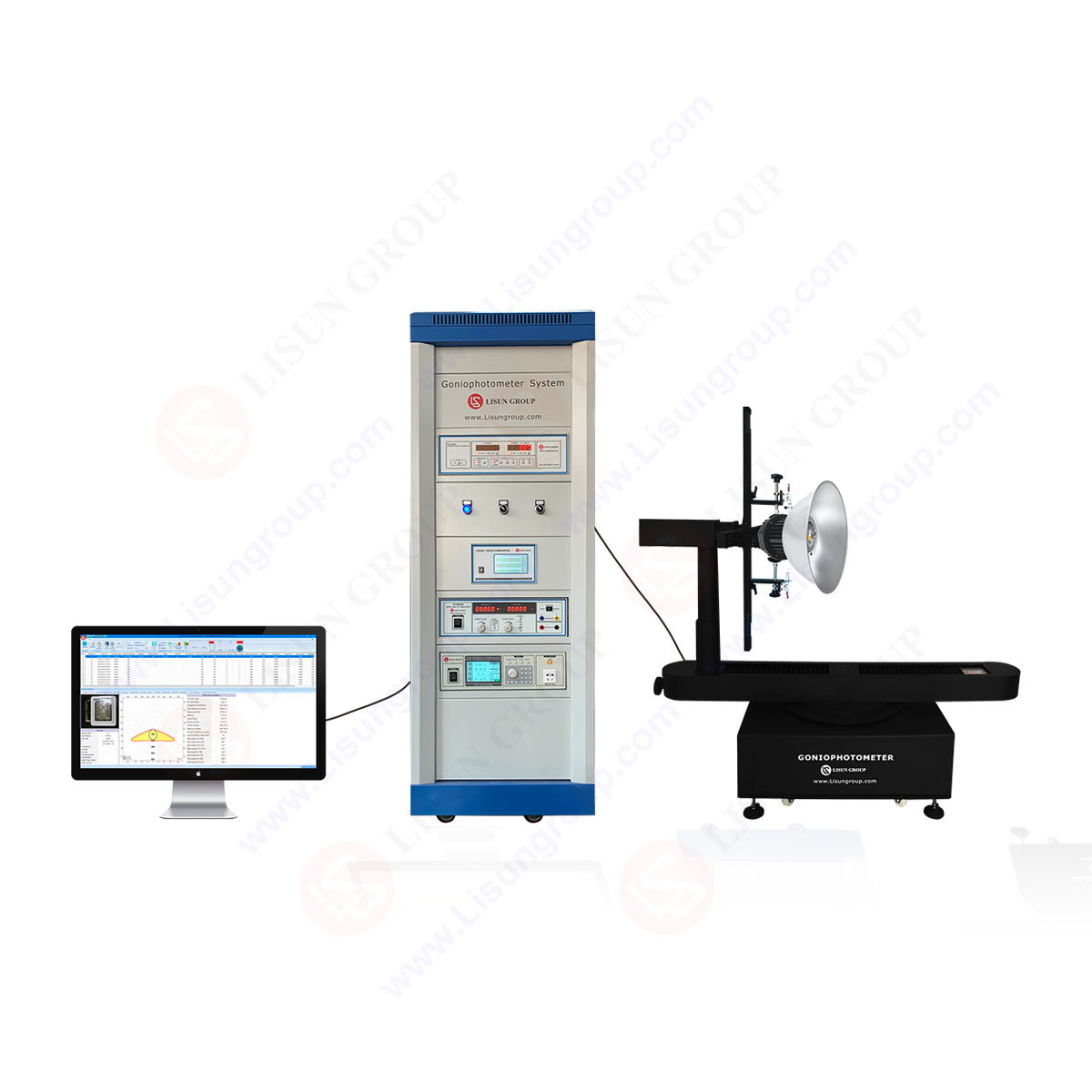
A significant advancement in the LSG-6000 system is its ability to integrate a **handheld spectroradiometer** for the goniospectroradiometer configuration (LSG-6000CCD). This integration addresses a growing industry need: measuring spatial color uniformity. According to CIE S025, the spatial uniformity of CCT and chromaticity coordinates is a critical performance indicator for LED luminaires. The LSG-6000CCD software synchronizes the angular position data from the goniometer with spectral data from the spectroradiometer, producing a 3D map of color distribution. This capability is particularly valuable for horticultural lighting, where the PPFD distribution must be uniform across the canopy. The system can export IES/LDT files containing both photometric and spectral data, a feature that is becoming standard for high-end lighting designs.
4. Practical Applications and Case Analysis
4.1 Measurement of Large Outdoor Luminaires
A case study was conducted to evaluate a 400W LED street luminaire with a diameter of 1500mm. Using the LSG-6000L (Super Big Size), the luminaire was mounted without rotation. The system automatically measured the luminous intensity distribution across 360° C-planes and γ-angles from 0° to 180°. The resulting photometric file was used to calculate the coefficient of utilization (CU) and the maximum ratio of distance to height (Spacing Criterion). The test confirmed that the luminaire met the requirements of a full-cutoff classification with a glare rating (UGR) below 19. The ability to use a **handheld spectroradiometer** during the same test cycle allowed for the measurement of spatial CCT variation, which was found to be within 200K across the beam angle, confirming product quality.
4.2 Plant Lighting (PAR/PPFD) Spatial Distribution Test
For horticultural applications, the LSG-6000CCD system was used to measure a 600W LED grow light. The system was configured with a PAR (Photosynthetically Active Radiation) detector and a **handheld spectroradiometer** to measure spectral output in the 400-700nm range. The test automatically generated a spatial PPFD distribution map, which is essential for determining the effective coverage area of the luminaire. The system exported data in IES format, which was then imported into a lighting simulation software to model the photosynthetic photon flux density at various mounting heights. This application demonstrates how the integration of a spectroradiometer transforms a standard goniophotometer into a comprehensive plant lighting testing station. 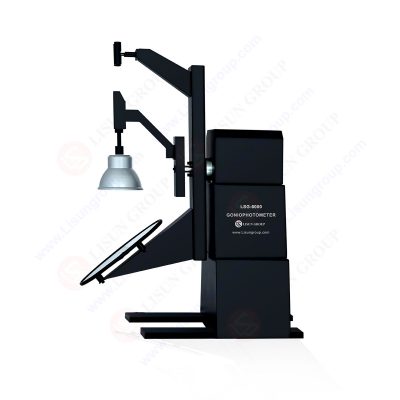
Fig. 1: LSG-6000 Moving Detector Goniophotometer (Mirror Type C) with integrated measurement software
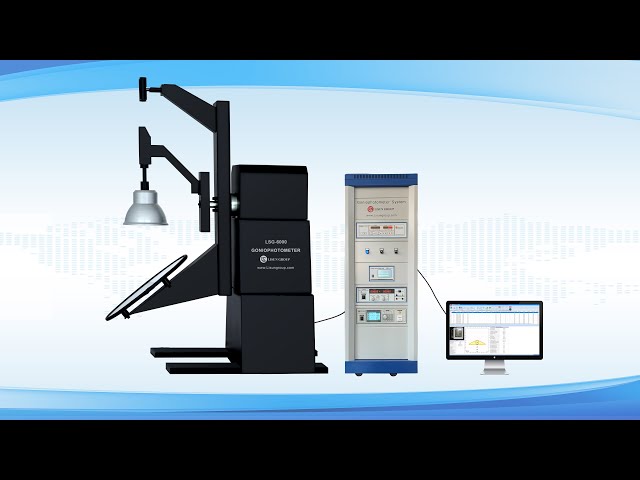
Video 1: Demonstration of LSG-6000 System Operation and Data Export
5. Conclusion
The Moving Detector Type C Goniophotometer, as exemplified by the LSG-6000 series, represents a robust solution for the challenges inherent in modern SSL photometry. By maintaining the luminaire in a stationary position and utilizing a synchronized mirror-detector system, it eliminates measurement artifacts caused by gravity and mechanical stress, thereby improving the accuracy of luminous intensity distribution data. The system’s compliance with LM-79-19, CIE-121, and EN 13032-1 ensures its acceptance in global markets. The key contribution of this work is the demonstration of integrating a **handheld spectroradiometer** into the goniophotometric workflow. This integration allows for the simultaneous acquisition of photometric and colorimetric spatial data, meeting the requirements of CIE S025 and EU 2019/2015. This capability is particularly valuable for quality assurance in horticultural lighting and for verifying the color uniformity of white LED products. Future developments may focus on automating the calibration process between the goniometer and the spectroradiometer and expanding the system’s capability to measure temporal light artifacts (flicker) in conjunction with spatial distribution. The LSG-6000 system, with its modular design and support for a **handheld spectroradiometer**, provides a future-proof platform for lighting test laboratories seeking comprehensive, standard-compliant measurement capabilities.