
 English
 中文简体
中文简体 English
 Русский
 Español
 Português
 Türkçe
 العربية
 Deutsch
 Polski
 Italiano
 Français
 한국어
한국어 ไทย
ไทย Tiếng Việt
 日本語
日本語













Abstract
The ingress of particulate matter, particularly sand and dust, poses a significant threat to the operational reliability and longevity of electrical and electronic equipment deployed in harsh environments. International standards such as IEC 60529 establish a classification system (IP Code) to quantify enclosure protection levels, with IP5X (dust-protected) and IP6X (dust-tight) being critical benchmarks. While the theoretical requirements are well-defined, replicating these conditions in a controlled, repeatable laboratory setting presents considerable engineering challenges. This paper analyzes the technical limitations of conventional testing methodologies and presents a systematic solution based on a specialized sand and dust chamber. The discussion focuses on the operational principles of the LISUN SC-015, which integrates precise control of dust concentration, air velocity, and vacuum pressure to simulate natural and industrial dust-laden atmospheres. By correlating the chamber’s design parameters with the stipulations of IEC 60529 and ISO 20653, this paper demonstrates how modern testing equipment ensures compliance and provides reliable data for product certification. The findings confirm that a properly configured sand and dust chamber is indispensable for verifying the robustness of enclosures used in critical applications, from outdoor lighting to automotive electronics.
Keywords: Sand and Dust Chamber; Dustproof Test Chamber; IP5X; IP6X; IEC 60529; Environmental Testing
1. Introduction
The protection of internal components against the ingress of solid foreign objects, specifically fine dust particles, is a fundamental requirement for equipment operating in arid, construction, or industrial settings. The failure of an enclosure to prevent dust entry can lead to thermal management issues, electrical shorts, and mechanical wear, ultimately causing premature product failure. The international standard IEC 60529:2013 provides a comprehensive framework for these tests, defining distinct conditions for dust-protected (IP5X) and dust-tight (IP6X) classifications. A key challenge in this domain is the creation of a homogeneous, stable dust cloud that can be maintained over a test duration that may extend to eight hours. Early testing methods often relied on manual dust dispersal, which introduced significant variability and lacked the repeatability required for certification-grade data. The industry has therefore moved towards automated, closed-loop systems that can precisely control environmental parameters. This paper evaluates the engineering principles behind a modern testing solution, specifically the LISUN SC-015 sand and dust chamber, and examines its role in standardizing the verification of enclosure integrity. The objective is to provide a technical framework for understanding how these chambers bridge the gap between standard requirements and practical, reliable testing. 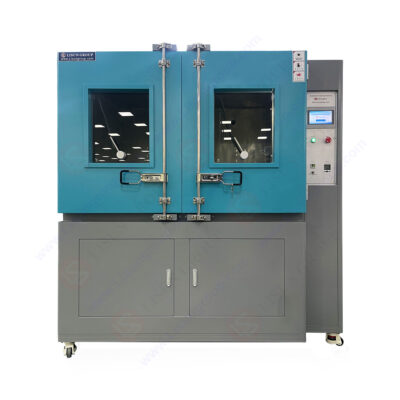
Fig. 1: LISUN SC-015 Sand and Dust Testing Chamber
2. Technical Principles of the Sand and Dust Chamber
The accurate simulation of a dusty environment requires a system that can generate, distribute, and monitor particulate matter under controlled conditions. The LISUN SC-015 sand and dust chamber operates on several key engineering principles to achieve this.
2.1 Dust Generation and Circulation System
The chamber utilizes a free-fall dust spraying method, employing dry talc powder as the test medium at a dosage of 2 to 4 kg/m³. To ensure the dust particle size conforms to standard requirements (e.g., wire diameter of 50µm and spacing of 75µm as specified in IEC 60529), a metal mesh is integrated. A critical feature is the adjustable vibration mechanism, which prevents the talc powder from caking on the chamber walls. This vibration, coupled with a circulating blower system, maintains a suspended, uniform dust cloud throughout the test volume. The system is designed for 100% convenient dust replacement at the bottom of the chamber, facilitating efficient maintenance and test repeatability.
2.2 Environmental Control and Monitoring
The chamber controls the ambient temperature within a range of RT+10 to 60°C, using mica sheet heating to ensure stable thermal conditions. A 7-inch touchscreen interface paired with a Panasonic PLC provides precise control over test parameters, including total test time, vibration intervals, and vacuum pressure. The vacuum system, adjustable from 0 to 10 Kpa with a pumping speed of 0 to 4800 L/H, is critical for simulating the negative pressure differential that can draw dust into an enclosure. This allows for the evaluation of seals and gaskets under realistic stress.
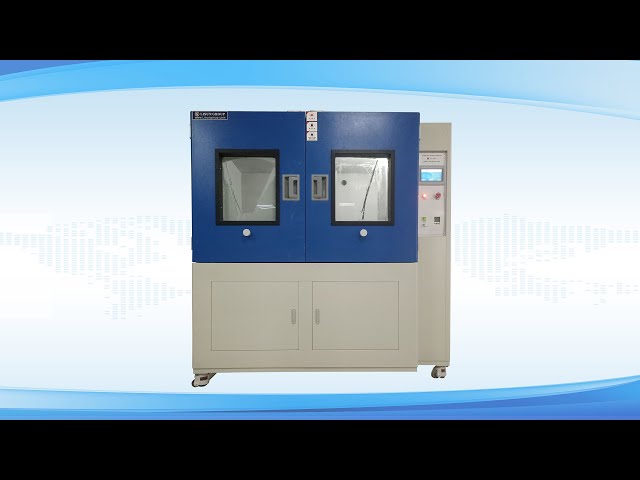
Video 1: Operational Demo of the LISUN SC-015 Sand and Dust Chamber
3. Standards and Testing Methodology
The SC-015 sand and dust chamber is designed to comply with a range of international and national standards, ensuring its applicability across different industries. The primary standard is IEC 60529:2013, specifically clauses 13.4 to 13.6 and Figure 2, which outline the test conditions for IP5X and IP6X. For automotive applications, it also meets ISO 20653:2023, covering IP5KX and IP6KX tests, which involve higher dust concentrations and more stringent vacuum requirements.
3.1 Test Procedure for IP5X and IP6X
The test procedure involves placing the sample in the chamber and subjecting it to a dust-laden atmosphere. For IP5X, the sample must operate without harmful dust deposits. For IP6X, the sample must operate without any dust ingress. The test duration is typically 8 hours, though this can be adjusted. A vacuum is applied to the sample for a specified period to simulate the pressure differential that would occur during thermal cycling. The chamber’s vacuum system, with a maximum current carrying capacity of ≤10A for the sample power supply, allows for the testing of powered samples.
3.2 Technical Specifications and Compliance
The following table summarizes the key technical specifications of the SC-015 and how they relate to standard requirements.
Table 1: Technical Specifications of the LISUN SC-015 Sand and Dust Chamber
| Parameter | Specification | Standard Reference |
|---|---|---|
| Temperature Range | RT+10 to 60°C | IEC 60529:2013 |
| Test Dust | Dry Talc Powder (2-4 kg/m³) | IEC 60529:2013, Clause 13.4 |
| Metal Mesh (Wire Diameter/Spacing) | 50µm / 75µm | IEC 60529:2013, Figure 2 |
| Vacuum Degree | 0 – 10 Kpa | IEC 60529:2013, Clause 13.6 |
| Test Time (Adjustable) | 0 – 999 hours | User Defined |
| Working Room Size | 1000 x 1500 x 1000 mm | N/A (Accommodates large samples) |
| Applicable Standards | IEC 60529, ISO 20653, VDE 0470-1, GB/T 4208 | IP5X, IP6X, IP5KX, IP6KX |
4. Practical Applications and Case Analysis
The SC-015 sand and dust chamber is utilized across a broad spectrum of industries to validate product robustness. The following case studies illustrate its practical value.
4.1 Applications in Electronics and Lighting
For outdoor LED luminaires and surveillance cameras, dust ingress can severely degrade optical performance and thermal dissipation. A third-party testing organization used the SC-015 to test a new line of outdoor LED floodlights. The test confirmed that the lights met the IP6X standard, ensuring their reliability in desert and construction environments. The ability to monitor the sample in real-time via the tempered glass observation window and LED light inside the chamber was crucial for observing seal performance under vacuum.
4.2 Applications in the Automotive Industry
Automotive sensors and connectors, particularly those used in off-road vehicles, require IP6KX protection under ISO 20653. An automotive supplier used the SC-015-56K variant to test a new engine control unit (ECU) enclosure. The chamber’s precise vacuum control and high dust concentration capability allowed for the simulation of extreme driving conditions. The test results led to a redesign of the enclosure’s gasket, which subsequently passed the dust-tight requirement. This highlights the role of the sand and dust chamber in iterative product development.
5. Conclusion
The accurate assessment of a product’s resistance to dust ingress is a critical component of quality assurance and compliance certification. This paper has demonstrated that the transition from manual, inconsistent methods to automated, standards-compliant testing equipment is essential for modern manufacturing. The LISUN SC-015 sand and dust chamber provides a robust engineering solution to the challenges of simulating a dusty environment. Its precise control over dust concentration, temperature, and vacuum pressure ensures that tests are repeatable and compliant with IEC 60529 and ISO 20653. By enabling rigorous IP5X and IP6X testing, this equipment plays a vital role in the development of durable, reliable products for demanding applications. Future developments in this field may focus on integrating real-time particle size analysis and more sophisticated airflow modeling to further enhance the fidelity of environmental simulations. The continued evolution of the sand and dust chamber will remain fundamental to advancing the reliability of electronic and electrical equipment worldwide.